The Significance and Challenges of Long-Term Experiments
The value of long-term experiments may not lie in providing immediate answers, but in preserving a mode of observation that can still be tested by time.

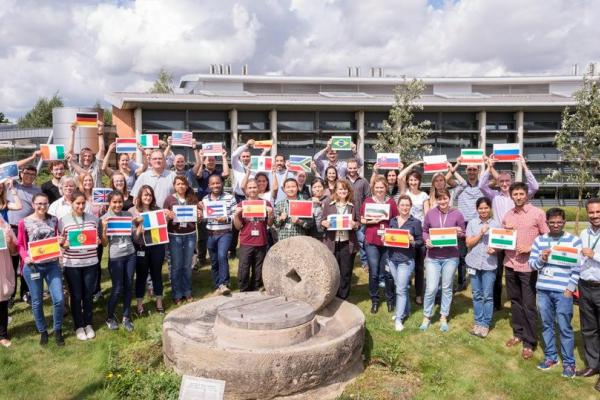
The world’s earliest long-term experiment is located at Rothamsted Research (RR) in the United Kingdom, founded in 1843 by Lawes and Gilbert.
Beginning in the 1840s, Rothamsted initiated field experiments on wheat under different fertilization regimes. While the original aim was to clarify the relationship between soil fertilization and plant nutrition, the accumulation of time transformed these experiments into something far broader. The extensive archive of soil samples has since been used to investigate the long-term impacts of atmospheric processes and human activities on soils, including sulfur deposition from the atmosphere, dioxin residues, and the accumulation of fallout following nuclear weapons testing.
What distinguishes Rothamsted is not only its more than 180 years of uninterrupted experimentation, but also its organizational structure, centered on a research institute closely integrated with experimental farms. Through this long-standing linkage between research and field practice, Rothamsted has served both as a global hub for scientific collaboration and as an important training ground for generations of agricultural scientists.
However, the research scope of Rothamsted has largely been confined to upland (non-flooded) cropping systems and does not include paddy rice experiments. For Asian countries where rice is the primary staple crop, the applicability of such results to paddy-field management therefore remains limited.
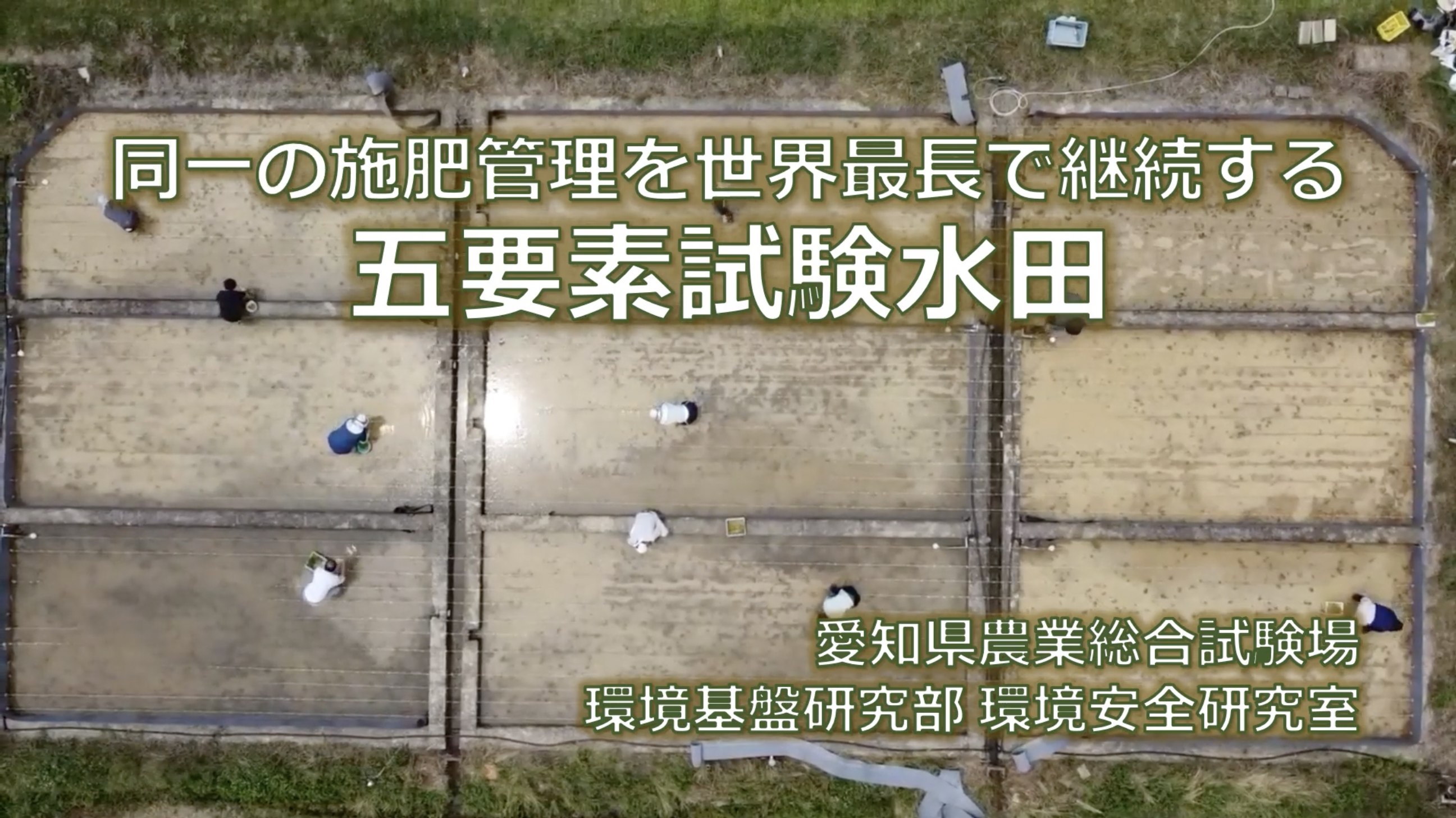
Shifting the focus back to Asia, the Aichi Agricultural Research Center in Japan has conducted long-term rice experiments continuously since 1926. As of this year (2025), these experiments have reached their centennial milestone.
At the Kansai Branch Meeting of the Japanese Society of Soil Science and Plant Nutrition, held this past Friday (12/12), Professor Junta Yanai of Kyoto Prefectural University noted that the Aichi long-term experiment has played a crucial role in fostering awareness of fertilizer management and the effects of compost on soil quality. It represents a research site that cannot be readily replaced.
Drawing on robust datasets accumulated through these long-term trials, Dr. Kaori Ando of the Aichi Agricultural Research Center highlighted several key insights relevant to field management:
- Among the three primary nutrients—nitrogen, phosphorus, and potassium—potassium fertilizer exerts the smallest influence on crop yield.
- Under global warming, rising accumulated temperature increases the concentration of soluble phosphorus in soils, thereby enhancing plant phosphorus uptake.
- Continuous compost application for more than 70 years is required to achieve a stable increase in soil organic carbon.
- Organic acids released during compost decomposition enhance iron activity, reduce phosphorus fixation, and increase phosphorus solubility and availability.
It is through such long-term experiments that we are able to glimpse how human activities and climate change gradually reshape soil quality, crop nutrition, and agricultural productivity over extended time scales.
In an era when AI-driven information floods the internet and the boundary between truth and falsehood grows increasingly blurred, feedback from the real world—and sustained human commitment to long-term observation—becomes ever more indispensable. Long-term experiments embody a form of first-hand evidence and temporal continuity that AI cannot readily replace.
Across the Kansai region of Japan, including Osaka, Hyogo, Wakayama, and Okayama, several agricultural institutions continue to maintain long-term experiments spanning 20 to 60 years. Yet sustaining such experiments is far from easy. They face persistent challenges related to personnel, policy, funding, and land availability, including the aging and loss of skilled experts, shrinking budgets, difficulty in securing uniform experimental sites, and limited access to analytical instruments.
Moreover, long-term experiments must contend with societal pressure: their potential benefits are difficult to convey in the short term, yet they are increasingly expected to deliver immediate and visible outcomes. According to Professor Yanai, even the century-old long-term experiment in Aichi is scheduled to come to an end this year.
Afterword
The temporal gap between the two persists within contemporary research environments that increasingly rely on real-time data and rapid feedback.
Large volumes of data accumulated over short periods may have inherent limitations in their ability to capture changes occurring across long time scales.
Technological advances have accelerated the generation and analysis of data, yet they do not necessarily shorten the time required for natural systems to respond to human actions.
Within this context, the value of long-term experiments may lie not in providing immediate answers, but in preserving a mode of observation that remains open to verification by time itself.
Note: This article is original. Some sentences were polished with AI assistance to refine the author’s intended tone.
Long-term experiments provide first-hand truths of environmental change and constitute a shared asset of human society.