Research Statement
I study soils as dynamic systems linking minerals, ecosystems, and climate. My research focuses on how mineral weathering and pedogenic processes control elemental cycling, soil fertility, and environmental responses across agricultural and natural systems.
Integrating mineralogy (XRPD), geochemistry, and field-based observations, I aim to provide direct evidence of soil processes and connect mineral-scale transformations to global environmental change, including enhanced rock weathering (ERW) as a climate mitigation strategy.
Featured Research
Enhanced Rock Weathering in Paddy Soils
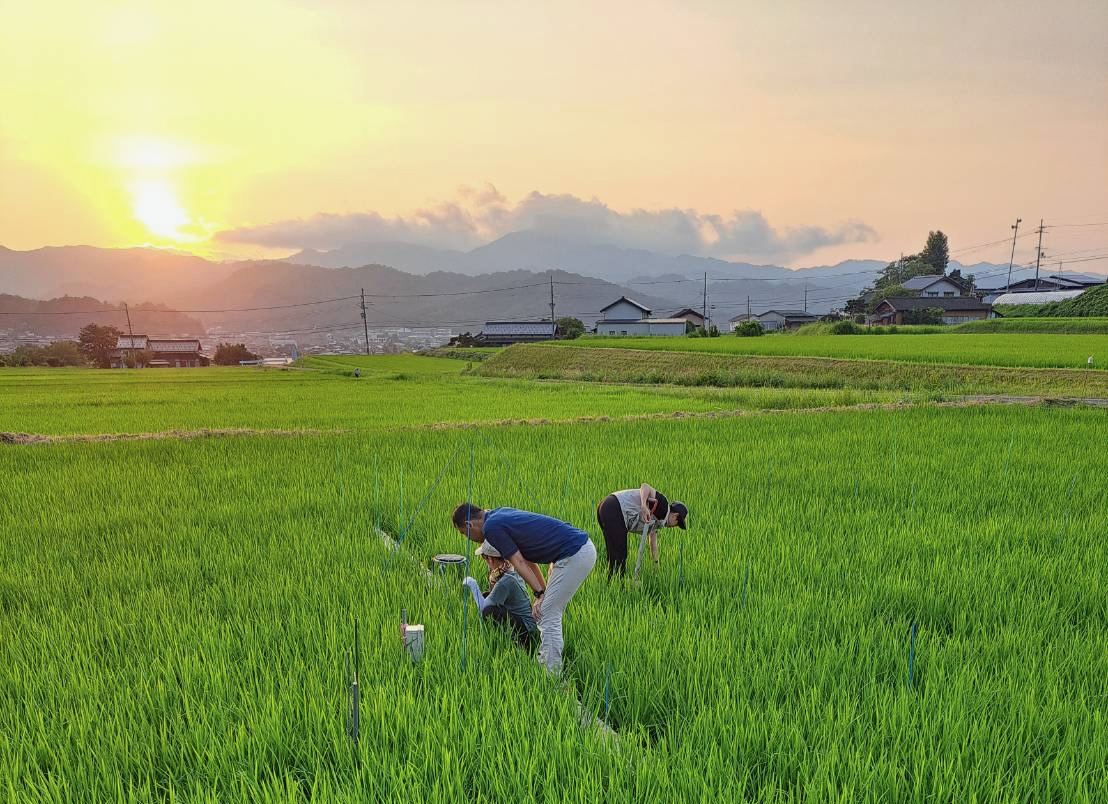
Field-based investigation of enhanced rock weathering (ERW) in paddy soils, focusing on mineral transformation, soil chemical dynamics, and greenhouse gas responses under real agricultural conditions.
Field site: Yosano Town, Kyoto — replicated basalt-amended and control plots used to quantify weathering processes and biogeochemical responses.
Current Works
Enhanced Rock Weathering
Field validation of mineral weathering and its role in climate mitigation and soil processes.
Ultramafic Soil Systems
Pedogenesis and metal (Cr, Ni) redistribution across climatic gradients.
Soil–Environment Interface
Linking mineralogy and geochemistry to environmental risk and agricultural systems.
Research Themes
Pedology
Soil morphology and classification
Geochemistry
Elemental fractionation and chemical speciation
Magnetism
Mineral magnetism and magnetic properties of soils